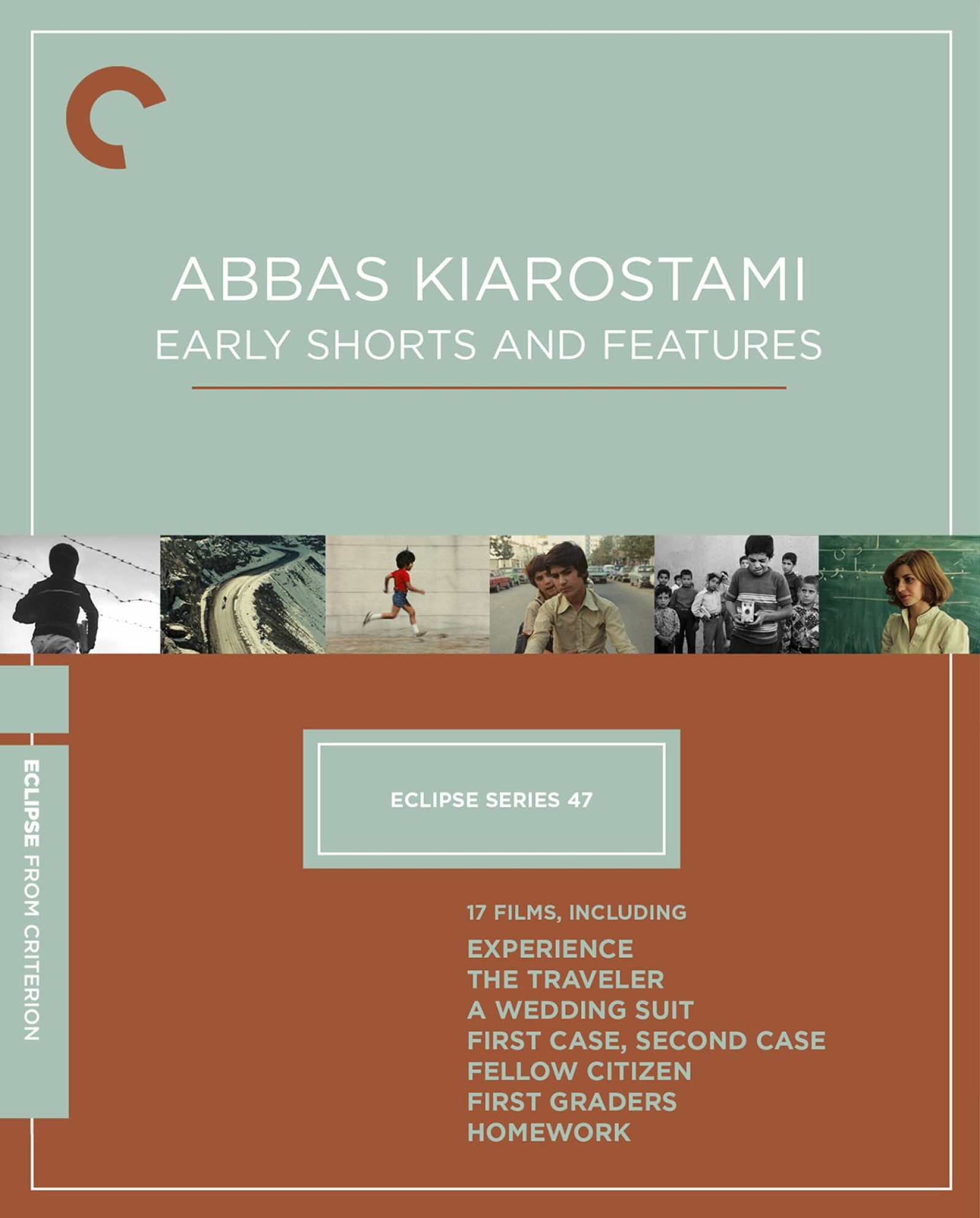
Abbas Kiarostami — Early Shorts and Features
套装简介 / Synopsis
Long before he became one of the most renowned artists in world cinema, the great Iranian filmmaker Abbas Kiarostami began his cinematic career at Tehran’s Institute for the Intellectual Development of Children and Young Adults (a.k.a. Kanoon), where he honed his distinctive style and themes. During his first decades as a filmmaker, Kiarostami moved freely among documentary, narrative, and even animation, and between joyous short films made for children and subtle works exploring the struggles of adolescents. Often using the classroom as a laboratory, he probed social and political tensions in Iranian society during the turbulent years before and after the 1979 revolution. Spanning his very first short, Bread and Alley (which the director called the “mother of all my films”); other underseen early revelations, like Experience and The Traveler; and nonfiction masterpieces such as Homework, the graceful, warm, and playful works collected here find moments of transcendent poetry within everyday life, and use deceptively simple premises to express universal truths about the human condition.
This release features 2K restorations undertaken by MK2 in collaboration with L’Immagine Ritrovata.
早在他成为世界电影最负盛名的艺术家之一之前,伟大的伊朗电影人阿巴斯·基亚罗斯塔米便在德黑兰的“青少年教育发展研究所”(又称卡农)开始了他的电影生涯,并在那里磨砺出他独特的风格与主题。在其作为电影人的最初几十年里,基亚罗斯塔米自由地游走于纪录片、叙事片乃至动画之间,游走于为儿童拍摄的欢乐短片与探讨青少年挣扎的细腻作品之间。他常常以教室为实验室,在 1979 年革命前后那些动荡岁月里,探究伊朗社会中的社会与政治张力。本套装横跨他的第一部短片《面包与小巷》(导演称之为“我所有影片之母”);其他较少被人看到、却极具启示性的早期作品,如《体验》与《旅行者》;以及《家庭作业》等非虚构杰作——这些优雅、温暖而充满趣味的作品,在日常生活中寻得超然诗意的瞬间,并以看似简单的设定,表达关于人类处境的普遍真理。
本发行版本由 MK2 与“重见光影”修复实验室(L’Immagine Ritrovata)合作完成 2K 修复。
影片明细 / Films in This Set(17 部)
面包与小巷 Bread and Alley 1970
阿巴斯·基亚罗斯塔米称这部影片为"我所有电影之母",开篇是一个轻快观察到的轶事:一个男孩拿着一条面包穿过德黑兰的小巷回家。这个男孩以及他看到并开始跟踪的老人的变体,将出现在基亚罗斯塔米未来的作品中;"死时间"的运用、旅程结构以及空间的诗意表达亦是如此。结尾一场涉及狗与门的戏,以一种冷峻的歧义收束全片。
“The mother of all my films,” according to Abbas Kiarostami, starts out as a breezily observed anecdote about a boy wending his way home through Tehran alleys carrying a loaf of bread. Variations on both the boy and the old man he sees and begins to follow will factor into future Kiarostami films, as will the use of “dead time,” the journey structure, and the poetic articulation of space. The final scene, involving a dog and a door, ends things on a note of wry ambiguity.
课间休息 Breaktime 1972
一个男孩因打破窗户在学校受罚,随后加入喧闹的同学大军,嘈杂地涌出德黑兰街头。他短暂加入一场即兴足球赛,却偷走球跑开而搅乱了比赛,最终漫无目的地沿一条繁忙公路游荡。全片无对白,但始终使用非同步的具象音效;这部情绪沉郁的影片展现了阿巴斯·基亚罗斯塔米用变焦、摇臂和直升机镜头拓展其视觉语汇。
Disciplined at school for breaking a window, a boy joins throngs of his schoolmates as they make a cacophonous exit into Tehran’s streets. He then briefly joins an impromptu soccer game but disrupts it by stealing the ball and running away, and ends up drifting aimlessly along a busy highway. Free of dialogue but using nonsynchronous concrete sound throughout, this moody film shows Abbas Kiarostami expanding his visual vocabulary with zooms and crane and helicopter shots.
经历 Experience 1973
本片改编自 amir 纳德里的故事(他亦为该片合编剧),截取一个十四岁男孩生活的片段,跟随他在大城市独自谋生:在照相馆当茶水工和助手、跑腿,并短暂地与一位漂亮的中产阶级女孩目光交汇。全片无配乐、对白稀少,以幽暗优雅的构图见长,是对青少年孤独的印象派式冥想。
Based on a story by Amir Naderi, who also cowrote the film, this slice of a fourteen-year-old boy’s life follows his efforts to fend for himself in the big city, working as a tea server and assistant in a photographer’s studio, running errands, and, briefly, exchanging glances with a pretty middle-class girl. With no music and little dialogue, and distinguished by its darkly elegant compositions, the film offers an impressionistic meditation on adolescent solitude.
旅客 The Traveler 1974
阿巴斯·基亚罗斯塔米的第一部长片聚焦一名外省男孩,他极度渴望到德黑兰看一场足球赛,以至于会对大人撒谎、欺骗其他孩子。这既是一部追寻电影,也是对青春执念的研究;以紧张感十足的黑白摄影拍摄,配以与其主角相配的安静能量。《旅客》以辛辣反讽的结局收尾,并拥有基亚罗斯塔米早期作品中最出色的儿童表演之一。
Abbas Kiarostami’s first feature focuses on a boy in a provincial city so avid to get to Tehran to see a soccer match that he’ll lie to adults and cheat other kids. A quest film that’s also a study of youthful obsession, it’s filmed in edgy black and white with a quiet energy that matches its hero’s. The Traveler has an acridly ironic ending and one of the best performances by a child in Kiarostami’s early work.
一个问题的两种解法 Two Solutions for One Problem 1975
这个简单的道德故事似乎预示了《朋友的家在哪里?》。两个小学生达拉和纳德本是朋友,直到达拉把纳德的笔记本撕坏还回去,纳德以牙还牙,引发一场不断升级的争斗,最终导致财物损坏和人身伤害。在第二种解法中,达拉认识到自己的过错并修补了笔记本,维护了和平与友谊。影片多以特写拍摄,旁白以诙谐的口吻记述动作。
This simple moral tale seems to prefigure Where Is the Friend’s House? Two young schoolboys, Dara and Nader, are friends until Dara returns Nader’s notebook torn and Nader retaliates in kind, setting off an escalating battle that leads to destruction of property and physical injury. In the second solution, Dara realizes his offense and repairs the notebook, preserving the peace and the friendship. The film is shot mostly in close-ups, with a narrator drolly chronicling the action.
我也行 So Can I 1975
阿巴斯·基亚罗斯塔米第一部为儿童拍摄(而非关于儿童)的影片,是与动画师纳菲塞·里亚希合作的真人与动画结合实验。当两个小学生观看动物动作的动画画面——袋鼠跳跃、鱼儿游动等——一个男孩(由里亚希的儿子卡迈勒饰演)说:"我也行",并模仿那些动作。音乐轻快,氛围有趣。另一个男孩由基亚罗斯塔米的儿子艾哈迈德饰演。
The first of Abbas Kiarostami’s films made for, rather than about, children was an experiment in combining live action and animation, done in collaboration with animator Nafiseh Riahi. As two schoolboys watch animated views of animals’ actions—kangaroos jumping, fish swimming, etc.—one boy (played by Riahi’s son Kamal) says, “I can, too,” and imitates the actions. The music is sprightly, the mood fun. The second boy is Kiarostami’s son Ahmad.
色彩 Colors 1976
这部表面上为儿童拍摄的、关于点缀我们世界的各种色彩的绘本式散文片,带有一种愉悦俏皮的形式主义练习气息。当旁白逐一历数色彩时,阿巴斯·基亚罗斯塔米向我们展示每种色彩在自然与人类生活中出现的位置(其中展现了革命前伊朗消费文化的精彩画面)。当然,片中少不了一个小男孩——在一段令人难忘的段落里,他幻想自己是赛车手。
Ostensibly a film for children, this picture-book essay about the range of hues that brighten our world has the air of a delightfully playful formalistic exercise. As a narrator runs though the colors one by one, Abbas Kiarostami shows us where each appears in nature and human life (which occasions some great views of prerevolutionary consumer culture in Iran). Of course, a little boy is featured—in one memorable sequence, he fantasizes about being a race-car driver.
一套婚礼服 A Wedding Suit 1976
在一座三层购物拱廊里,一个为裁缝干活的少年被另外两个男孩纠缠:他们想在一套新西装交给主人之前,借来穿去参加社交活动。作为阿巴斯·基亚罗斯塔米在卡努纳电影出品的最成熟、情节最复杂的作品之一,这部观察敏锐的剧情片包含悬念、讽刺、暴力暗流,甚至还有一场魔术表演。
In a trilevel shopping arcade, a teenage boy who works for a tailor is besieged by two other boys who want to borrow a new suit to wear on a social outing before it’s turned over to its owner. One of the most accomplished and intricately plotted of Abbas Kiarostami’s Kanoon films, this sharply observed drama contains suspense, satire, an undercurrent of violence, and even a magic show.
致敬教师 Tribute to Teachers 1977
这部应伊朗教育部委托拍摄的纪录片出自巴列维王朝末年,片中官员不出所料地称赞教师这一职业神圣、高尚、光荣。而受访教师则不那么天真:有人抱怨学生不知感恩、薪水微薄。这些对比的观点既表达了阿巴斯·基亚罗斯塔米对教育的兴趣,也记录了他对教育实践方式的某些保留。
An assignment from Iran’s Ministry of Education, this documentary from the last years of the Pahlavi dynasty includes interviews with officials who predictably praise teaching as a sacred, noble, and honorable profession. The teachers who are also interviewed are less starry-eyed; one speaks of ungrateful students and the job’s poor pay. The contrasting views express Abbas Kiarostami’s interest in education while registering some of his reservations about how it is practiced.
解法第一号 Solution No. 1 1978
这部少见的、与儿童无关的卡努纳电影是一部不寻常的公路片,拍摄于革命期间,让阿巴斯·基亚罗斯塔米得以从首都暂时脱身。在德黑兰北部壮丽的山景中拍摄,影片展示一名年轻人站在路边,拿着一个轮胎,试图搭车。几分钟未能成功后,他干脆拿起轮胎滚下山去——这是一段抒情的视觉旅程,配以凯旋式的配乐。
The rare Kanoon film that doesn’t involve children, this unusual road movie was made during the revolution and afforded Abbas Kiarostami what may have been a welcome escape from the capital. Shot amid spectacular mountain scenery north of Tehran, it shows a young man on a roadside with a tire, trying to get a ride. After several minutes of failure, he simply takes the tire and rolls it down the mountain, a lyrical visual journey that’s accompanied by a triumphal score.
第一案,第二案 First Case, Second Case 1979
1979年春天拍摄,正值国王被推翻不久,这部非凡的影片如同一张罗夏墨迹测验,映照出处于革命心态中的人们。阿巴斯·基亚罗斯塔米设置了两种课堂纪律情境——在一种情境中,一名学生告发了捣蛋者;在另一种中,七名学生拒绝告密——随后让几位成年权威人士对结果发表评论。这些引人入胜的回应唤起了秩序与抵抗之间的冲突。
Made in the spring of 1979, not long after the shah’s overthrow, this extraordinary film serves as a Rorschach blot for people in a revolutionary mindset. Abbas Kiarostami stages two versions of a classroom-discipline situation—in one, a student tells on a troublemaker; in the other, seven students refuse to rat—and then has several adult authorities comment on the outcomes. The fascinating responses evoke conflicts between order and resistance.
牙疼 Toothache 1980
尽管阿巴斯·基亚罗斯塔米这部影片大半是一位牙医面对镜头直白讲授口腔卫生,但在描述小穆罕默德-礼萨饱受牙疼折磨前的家庭与学校生活时,仍能令人信服地透出基亚罗斯塔米式的味道。(基亚罗斯塔米是在男孩拔牙时发现他,之后补拍了故事的前半部分。)有些观众觉得这部片子滑稽可笑,这证明巨大的不适也可伴随幽默。
Though much of this film by Abbas Kiarostami is a straightforward lecture about dental hygiene delivered by a dentist facing the camera, it still manages to be persuasively Kiarostami-esque in its description of young Mohammad-Reza’s life at home and school before he falls prey to tooth woes. (Kiarostami found the boy having a tooth removed, then filmed the earlier parts of the story later.) That some audiences find the film hilarious testifies to the humor that can accompany great discomfort.
有序还是无序 Orderly or Disorderly 1981
第一个镜头展示学生们平静有序地走下楼梯,第二个镜头则将同一动作展现为混乱的奔涌。在阿巴斯·基亚罗斯塔米念出"录音、摄影"的场记板分隔下,后续段落依次描述了校园、校车以及德黑兰杂乱交通中同样的二元行为。基亚罗斯塔米称这是"一部真正具有教育意义的电影",但它读起来更像一段古怪的哲学旁白。
The first shot shows students descending a staircase in calm, orderly fashion, then the second details the same action as a chaotic rush. Separated by slates and director Abbas Kiarostami’s voice intoning, “Sound, camera,” subsequent sequences describe the same dichotomous behavior in a schoolyard, on a school bus, and in the haphazard traffic of Tehran. Kiarostami described this as “a truly educational film,” but it plays more like a quirky philosophic aside.
合唱团 The Chorus 1982
一位老人漫步在拉什特喧闹的街头,当他的助听器从耳朵里被碰掉时,影片的声音也随之消失,模拟笼罩着他的寂静。在家中,当他取下助听器时同样的事情发生;阿巴斯·基亚罗斯塔米将他无声的动作与外面试图引起他注意的女学生们的喧闹交叉剪辑。这是基亚罗斯塔米又一部关于寂静与声音、老年与青春、孤独与团结之对比的冥想。
An old man strolls through the noisy streets of Rasht, and when his hearing aid is knocked out of his ear, the film’s sound goes off, mimicking the silence that envelops him. At home, the same thing happens when he takes the device out, and Abbas Kiarostami intercuts his silent actions with the clamor of schoolgirls who try to get his attention from outside. Another Kiarostami meditation on the contrasts of silence and sound, age and youth, solitude and solidarity.
同胞公民 Fellow Citizen 1983
阿巴斯·基亚罗斯塔米对德黑兰汽车文化与革命后社会权力运作的迷恋,在这部纪录片中合二为一:影片讲述一名被派往德黑兰市中心执行驾驶限制的交警(地点靠近导演在卡努纳的办公室)。这名交警在自己的世界里如同摇滚明星,面对接连不断、怒气冲冲的司机,始终冷静威严。
Abbas Kiarostami’s fascination with both Tehrani car culture and the uses of power in postrevolutionary society combine in this documentary about a traffic officer assigned to enforce driving restrictions in central Tehran (a locale near the director’s office at Kanoon). The officer, a rock star in his own world, remains coolly authoritative as he faces a steady stream of exasperated motorists.
一年级学生 First Graders 1984
受他在卡努纳的工作和自己儿子上学经历的启发,阿巴斯·基亚罗斯塔米两部关于教育的纪录片长片中的第一部,瞥了一眼满是欢呼嬉闹男孩的校园,但主要场景发生在一位处理迟到与纪律问题的督学办公室里。你几乎可以看到这些男孩在家庭之外与权威和同龄人的最初接触中,性格正在成形。
Inspired by his work at Kanoon and his own sons’ schooling, the first of Abbas Kiarostami’s two documentary features about education looks in on a schoolyard of chanting, playful boys but mainly transpires in the office of a supervisor who has to deal with latecomers and discipline problems. You can almost see the boys’ personalities forming in their first encounters with authorities and peers outside the home.
家庭作业 Homework 1989
在阿巴斯·基亚罗斯塔米第二部关于教育的纪录长片中,导演亲自提问,接连追问一群总是可爱的一二年级学生的家庭情况以及他们必须在家完成的作业。结果显示许多家长是文盲。耐人寻味的是,许多孩子能定义惩罚(体罚似乎很普遍),却不能定义鼓励。
In Abbas Kiarostami’s second documentary feature about education, the filmmaker himself asks the questions, probing a succession of invariably cute first- and second-graders about their home situations and the schoolwork they must do there. It emerges that many parents are illiterate. Tellingly, many kids can define punishment (the corporal variety seems common) but not encouragement.
特色功能 / Special Features
备注 / Note
蚀系列重启首套,蓝光规格