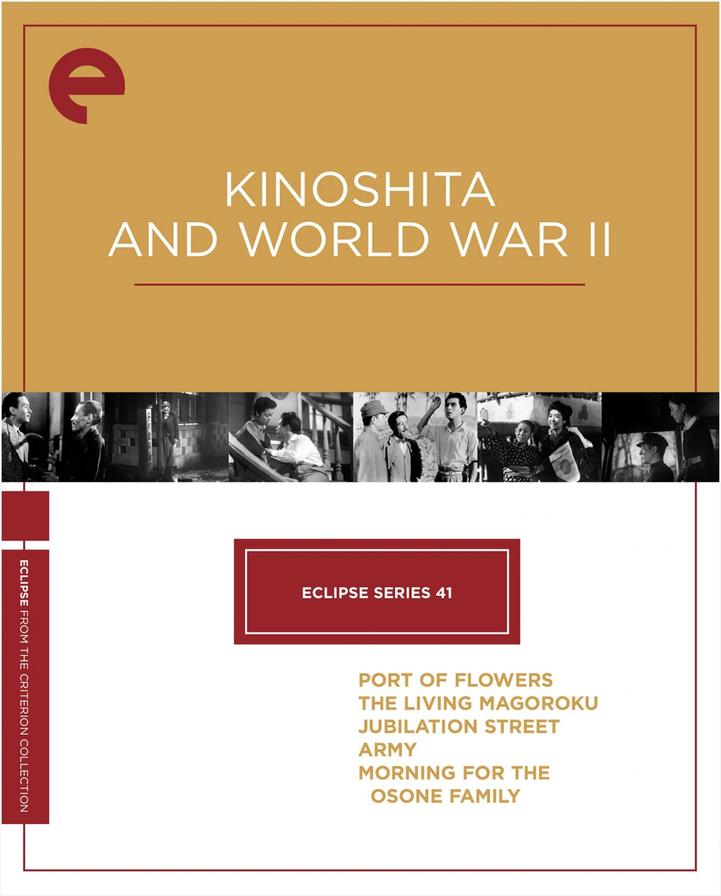
Kinoshita and World War II
套装简介 / Synopsis
Hugely popular in his home country of Japan, Keisuke Kinoshita worked tirelessly as a director for nearly half a century, making lyrical, sentimental films that often center on the inherent goodness of people, especially in times of distress. He began his directing career during a most challenging time for Japanese cinema: World War II, when the industry’s output was closely monitored by the state and often had to be purely propagandistic. This collection of Kinoshita’s first films—four made while the war was going on and one shortly after Japan’s surrender—demonstrates the way the filmmaker’s humanity and exquisite cinematic technique shone through even in the darkest of times.
木下惠介在祖国日本极受欢迎,他作为导演不知疲倦地工作了近半个世纪,拍摄抒情、感伤的影片,常常聚焦于人内在的善良——尤其是在危难时刻。他开始导演生涯时,正值日本电影最艰难的时期之一:第二次世界大战,当时该行业的产出受到国家严密监控,往往不得不纯然成为宣传。本套装收录木下的早期作品——四部拍摄于战争进行期间,一部拍摄于日本投降后不久——展示了这位电影人的人道主义精神与精湛电影技法,即便在最黑暗的岁月里也依然闪耀。
影片明细 / Films in This Set(5 部)
花之港 Port of Flowers 1943
二战爆发之初,一座迷人港口小镇里善良而天真的居民被一对骗子耍得团团转。然而,当这两个混混被强烈的良知谴责折磨时,他们的计划反倒弄巧成拙。木下惠介的导演处女作是一部轻松、温情、时常令人捧腹的大众喜爱之作,见证了这位电影人对人性的信心。
The sweet but naive denizens of a charming port town are hoodwinked by a couple of con men at the outset of World War II. But the hustlers’ plan backfires when they come down with severe cases of conscience. Keisuke Kinoshita’s directorial debut is a breezy, warmhearted, and often very funny crowd-pleaser that’s a testament to the filmmaker’s faith in people.
生机勃勃的六十万 The Living Magoroku 1943
一个迷信的农家犹豫不决,不愿把自家田地用来种粮以支援国家军队。木下惠介这部乡村剧情片本为鼓动战争而拍,但他的故事枝蔓丛生:一条支线围绕家中传家的武士刀展开,另一条则讲述一段萌芽的青春恋情。
A superstitious farming family is hesitant to use its fields to grow crops to help feed the nation’s troops. Keisuke Kinoshita’s rural drama was made to promote the war effort, but his story branches off in many directions, including one subplot about the family’s heirloom samurai sword and another about a blossoming young romance.
欢呼之街 Jubilation Street 1944
随着战事升级,东京一条邻里关系紧密的街道上的居民被迫搬迁,以便政府征用这片空间。木下这部细腻的影片以优美而别出心裁的镜头,追踪了这些被疏散者的恐惧与渴望。
As World War II escalates, the tight-knit inhabitants of a street in Tokyo must relocate from their homes so the government can use the space. Kinoshita’s sensitive film—beautifully and resourcefully shot—traces the fears and desires of the evacuees.
陆军 Army 1944
木下这部雄心勃勃、感人至深的影片开篇是一部关于某个日本家族军旅传统的多代史诗,随后转入对战时父母之爱的复杂刻画。田中绢代与笠智众饰演被送上战场的男孩的父母,他们挖掘出了超越意识形态的深沉情感。
Kinoshita’s ambitious and intensely moving film begins as a multigenerational epic about the military legacy of one Japanese family, before settling into an emotionally complex portrayal of parental love during wartime. As the mother and father of a boy shipped off to battle, Kinuyo Tanaka and Chishu Ryu locate profound depths of feeling that transcend ideology.
大曾根家的早晨 Morning for the Osone Family 1946
木下在二战结束后的第一部作品是一个令人痛心、制作精良的故事:一个思想开明的日本家庭被战争与帝国主义政治撕裂。《大曾根家的早晨》既真切地流露着对国家战争新创伤口的苦涩,又对民主的明天满怀鼓舞人心的希望。
Kinoshita’s first film after the end of World War II is a wrenching, superbly wrought tale about a liberal-minded Japanese family torn apart by war and imperialist politics. Morning for the Osone Family is both palpably bitter about the nation’s fresh wartime wounds and inspiringly hopeful about a democratic tomorrow.
特色功能 / Special Features
(官网该套装详情页未列出特色功能区块)