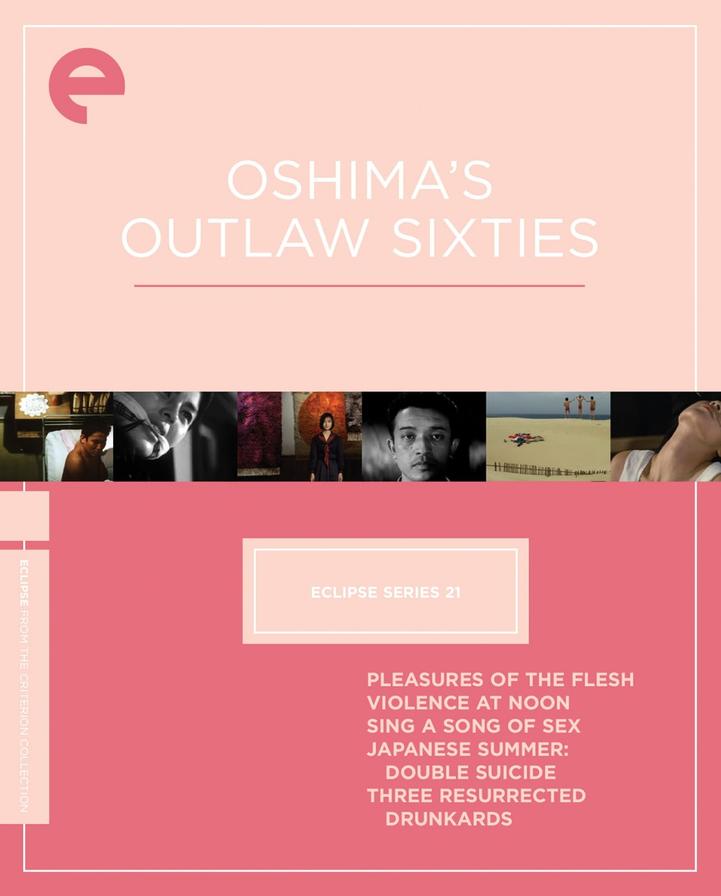
Oshima's Outlaw Sixties
套装简介 / Synopsis
Often called the Godard of the East, Japanese director Nagisa Oshima was one of the most provocative film artists of the twentieth century, and his works challenged and shocked the cinematic world for decades. Following his rise to prominence at Shochiku, Oshima struck out to form his own production company, Sozo-sha, in the early sixties. That move ushered in the prolific period of his career that gave birth to the five films collected here. Unsurprisingly, this studio renegade was fascinated by stories of outsiders—serial killers, rabid hedonists, and stowaway misfits are just some of the social castoffs you’ll meet in these audacious, cerebral entries in the New Wave surge that made Japan a hub of truly daredevil moviemaking.
日本导演大岛渚常被称为“东方的戈达尔”,是20世纪最具挑衅性的电影艺术家之一,其作品数十年来不断挑战并震撼电影界。在松竹公司崭露头角之后,大岛渚于60年代初独立出来,创立了自己的制作公司“创造社”(Sozo-sha)。这一举动开启了他创作生涯中多产的时期,催生了本集所收录的五部影片。不出所料,这位制片厂的叛逆者对外来者的故事深感兴趣——连环杀手、狂热的享乐主义者、躲在船上的社会弃儿,仅是你将在这些大胆而智性的作品中遇到的部分社会残渣;它们是那股新浪潮浪潮中的篇目,正是这股浪潮使日本成为真正无所畏惧的电影创作中心。
影片明细 / Films in This Set(5 部)
肉体的享乐(Pleasures of the Flesh,译名仅供参考) Pleasures of the Flesh 1965
一名堕落的商人勒索情场失意的浪荡子笃(Atsushi),要他在自己服刑期间替他看管一只装满挪用公款的手提箱。然而笃并没有等着那人回来取钱,而是决定在一阵贪欲的狂潮中将钱挥霍一空——他满心以为自己终会被追查到并遭杀害。大岛渚涉足当时流行的软色情“粉红电影”类型之作,是一趟引人入胜的、纵享过度的旅程。
A corrupt businessman blackmails the lovelorn reprobate Atsushi into watching over his suitcase full of embezzled cash while he serves a jail sentence. Rather than wait for the man to retrieve his money, however, Atsushi decides to spend it all in one libidinous rush—fully expecting to be tracked down and killed. Oshima’s dip into the waters of the popular soft-core “pink film” genre is a compelling journey into excess.
白昼的暴行(Violence at Noon,译名仅供参考) Violence at Noon 1966
《白昼的暴行》围绕一连串骇人听闻的谋杀与强奸案背后的诡异情形展开。出人意料的是,影片既聚焦于这名施暴男子本身,也同样聚焦于那两名庇护他的女子——他的妻子和一名曾经的受害者。全片包含超过两千个剪辑点与大量富于创意的宽银幕构图,这部冷峻而碎片化的人物研究,是一场对犯罪与社会衰败令人着迷的探究。
Violence at Noon concerns the odd circumstances surrounding a horrific murder and rape spree. In a twist, the film is as much about the two women who protect the violent man—his wife and a former victim—as it is about him. Containing more than two thousand cuts and a wealth of inventive widescreen compositions, this coolly fragmented character study is a mesmerizing investigation of criminality and social decay.
日本春歌考(Sing a Song of Sex,译名仅供参考) Sing a Song of Sex 1967
在大岛渚这则谜一般的故事里,四名性欲旺盛、正为大学入学考试做准备的高中生,偶遇了一名醉醺醺、唱着粗俗酒歌的老师。这次相遇将他们引上了一条与学业无关的道路。大岛渚以迷幻、自由的形式描绘了一代人的政治冷漠,并配以令人惊叹的彩色摄影。
In Oshima’s enigmatic tale, four sexually hungry high school students preparing for their university entrance exams meet up with an inebriated teacher singing bawdy drinking songs. This encounter sets them on a less than academic path. Oshima’s hypnotic, free-form depiction of generational political apathy features stunning color cinematography.
日本夏日:双重自杀(Japanese Summer: Double Suicide,译名仅供参考) Japanese Summer: Double Suicide 1967
一个沉迷性爱的年轻女子、她在街上遇见的一名想寻死的男人、一个对枪上瘾、梦想当黑帮的人——在大岛渚这幅恶魔般、荒诞主义的画像中,被困在一处地下藏身之所的,正是这三以及其他一些非理性、古怪的无政府主义者;大岛渚将其视为日本青年文化中的“死亡驱动力”。
A sex-obsessed young woman, a suicidal man she meets on the street, a gun-crazy wannabe gangster—these are just three of the irrational, oddball anarchists trapped in an underground hideaway in Oshima’s devilish, absurdist portrait of what he deemed the death drive in Japanese youth culture.
归来的醉鬼(Three Resurrected Drunkards,译名仅供参考) Three Resurrected Drunkards 1968
三个笨手笨脚的年轻人在海滩嬉闹。当他们游泳时,衣服被偷走并换上了另一套新衣。穿上这身衣服后,他们被误认作无合法身份的韩国人,最终遭到一群滑稽暴怒的当局人员追缉。这是对日本对待其韩国移民方式的尖锐评论,也是大岛渚在政治上最为投入、同时又最为疯癫胡闹的一面。
A trio of bumbling young men frolic at the beach. While they swim, their clothes are stolen and replaced with new outfits. Donning these, they are mistaken for undocumented Koreans and end up on the run from comically outraged authorities. A cutting commentary on Japan’s treatment of its Korean immigrants, this is Nagisa Oshima at both his most politically engaged and madcap.
特色功能 / Special Features
(官网该套装详情页未列出特色功能区块)