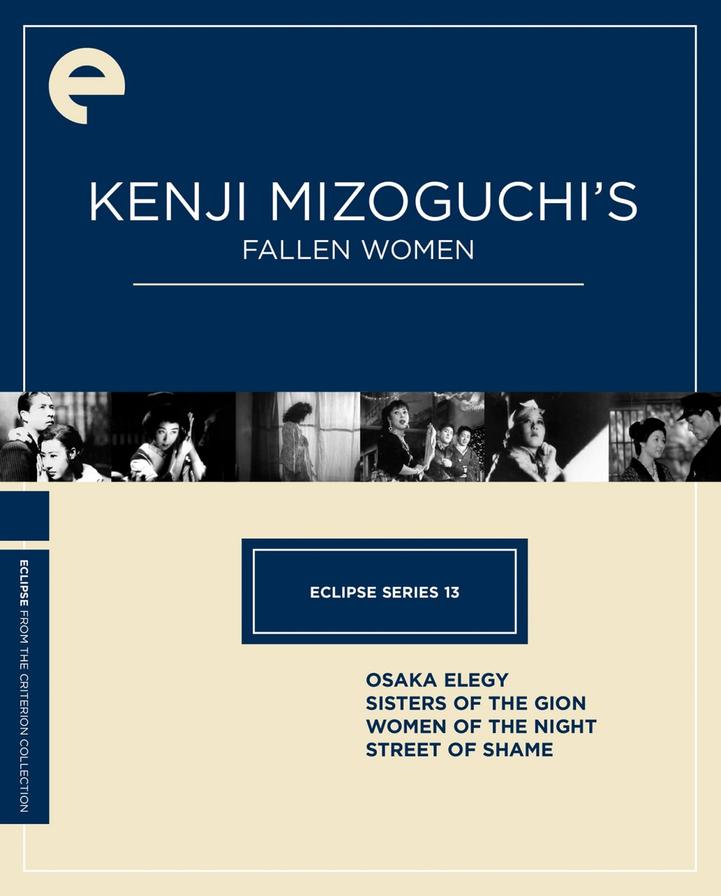
Kenji Mizoguchi's Fallen Women
套装简介 / Synopsis
Over the course of a three-decade, more than eighty film career, master cineaste Kenji Mizoguchi (Ugetsu, Sansho the Bailiff) would return again and again to one abiding theme: the plight of women in Japanese society. In these four lacerating works of social consciousness—two prewar (Osaka Elegy, Sisters of the Gion), two postwar (Women of the Night, Street of Shame)—Mizoguchi introduces an array of compelling female protagonists, crushed or resilient, who are forced by their conditions and culture into compromising positions. With Mizoguchi’s visual daring and eloquence, these films are as cinematically thrilling as they are politically rousing.
在长达三十年、超过八十部电影的生涯中,电影大师沟口健二(《雨月物语》〔Ugetsu〕、《山椒大夫》〔Sansho the Bailiff〕)一再回到一个恒久的主题:日本社会中女性的困境。在这四部充满社会意识、刺痛人心的作品中——两部战前作品(《大阪物语》〔Osaka Elegy〕、《祇园姊妹》〔Sisters of the Gion〕),两部战后作品(《夜之女》〔Women of the Night〕、《赤线地带》〔Street of Shame〕)——沟口健二塑造了一系列令人注目的女性主角,或被压垮,或坚韧不屈,她们被自身的处境与文化逼迫到妥协的境地。凭借沟口健二在视觉上的大胆与雄辩,这些影片在电影感上令人震撼,在政治上也同样振聋发聩。
影片明细 / Films in This Set(4 部)
《大阪物语》(译名仅供参考) Osaka Elegy 1936
《大阪物语》在评论界和观众中都大获成功,奠定了沟口健二作为日本最重要导演之一的地位。沟口常用的女主角山田五十铃饰演绫子——一名电话接线员,为了供养浪荡的父亲,她陷入了与老板之间有损名誉、毁了自己的关系之中。凭借流畅的摄影和娴熟的叙事,《大阪物语》为沟口开启了有声情节剧的新时代。
A critical and popular triumph, Osaka Elegy established Mizoguchi as one of Japan's major filmmakers. The director's often-used leading actress Isuzu Yamada stars as Ayako, a switchboard operator trapped in a compromising, ruinous relationship with her boss to help support her wastrel father. With its fluid cinematography and deft storytelling, Osaka Elegy ushered in a new era of sound melodrama for Mizoguchi.
《祇园姊妹》 Sisters of the Gion 1936
《祇园姊妹》跟随独立、不感情用事的姐姐おもちゃ(山田五十铃 饰)与更守旧的妹妹梅吉(梅蓉子 饰)两条平行的人生轨迹——两人都是祇园闹市区的艺伎。沟口这部影片拍摄精彩、毫不妥协地审视了将许多女性压在社会阶梯最底层的种种力量。
Sisters of the Gion follows the parallel paths of the independent, unsentimental Omocha (Isuzu Yamada) and her sister, the more tradition-minded Umekichi (Yoko Umemura), both geishas in the working-class district of Gion. Mizoguchi's film is a brilliantly shot, uncompromising look at the forces that keep many women at the bottom rung of the social ladder.
《夜间女性》(译名仅供参考) Women of the Night 1948
二战结束后,沟口受意大利新现实主义启发,拍摄了他职业生涯中情感与视觉上最粗粝的影片之一。《夜间女性》在大阪实景拍摄,讲述了两姐妹——战争遗孀房子、与毒品走私犯有染的夏子——以及她们年轻的朋友久美子,在周围战后废墟中沉沦于卖淫和道德混乱的故事。
After World War II, Mizoguchi was inspired by Italian neorealism to make one of the most emotionally and visually raw films of his career. Filmed on location in Osaka, Women of the Night concerns two sisters—Fusako, a war widow, and Natsuko, having an affair with a narcotics smuggler—who along with their younger friend Kumiko descend into prostitution and moral chaos amid the postwar devastation surrounding them.
《赤线地带》 Street of Shame 1956
在最后一部影片中,沟口将一生的阅历倾注于一个令人心碎的故事——一间妓院里满是梦想不断被周围社会经济现实击碎的女人。影片以东京的红灯区为背景(日文片名直译即"赤线"),《赤线地带》如此尖锐、又如此受欢迎,以至于影片上映仅数月后日本通过反卖淫法时,有人称这部影片正是催化剂之一。
For his final film, Mizoguchi brought a lifetime of experience to bear on the heartbreaking tale of a brothel full of women whose dreams are constantly being shattered by the socioeconomic realities surrounding them. Set in Tokyo's Red Light District (the literal translation of the Japanese title), Street of Shame was so cutting, and its popularity so great, that when an antiprostitution law was passed in Japan just a few months after the film's release, some said it was a catalyst.
特色功能 / Special Features
(官网该套装详情页未列出特色功能区块)